Old Apple vs. New Apple

In the last decade, Apple has successfully risen to the forefront of consumer technology. During this transformation from obscure computer company to leader in consumer and media technology we have seen the death of the hobbyist community and the rise of an icon of fashion and design.
The Old Apple

When Apple was more obscure, it was difficult to be a fanboy. Growing up I would be ridiculed at school for using a Mac. The other kids would spout off the typical argument that the “Macs suck” (such a well structured argument…) Whenever I would find another Mac User, we would have an instant connection and friendship. Being in the minority automatically created a sense of community. We were enthusiasts. We looked forward to Mac World and tinkering/fixing/upgrading our machines. We had to endure the persistent rumors that Apple was going out of business (for reals this time).

The lack of acceptance of Apple in the world lead to that cult-of-the-Mac following that Apple became known for. Most Apple users fit into that category of “round pegs in square holes” that the infamous “Think Different” campaign exemplified. Those were truly the golden days of Apple Computer for their loyal users.

“Here’s to the Crazy Ones! The misfits. The rebels. The troublemakers. The round pegs in the square holes. The ones who see things differently. They’re not fond of rules. And they have no respect for the status quo. You can praise them, disagree with them, quote them, disbelieve them, glorify or vilify them. About the only thing you can’t do is ignore them. Because they change things.”

The New Apple

When Steve Jobs returned to Apple in 1998, he turned the company around. He revolutionized the way that consumers looked at computers. He realized the power of marketing to women and the power of aesthetics in computer design. Once computers became an icon of design and beauty, they also became a symbol of class. Today, many individuals purchase computers based solely on the fact that they are “stylish” or “popular.”

Now, when I see a Mac user, and I randomly go talk to him or her, I am no longer greeted with the enthusiastic “You’re a Mac user too?” which was once so prevalent. Now I get weird stares, or realize that they are using Vista on that beautiful machine. People are no longer loyal to the computer, nor the ideology, but the idea of being one of the social elite.

The computers these days are much more beautiful and elegant that the old beige computers of yore. OS X is rock solid and gorgeous compared to the relatively simplistic Mac OS 5-9. Yet, part of me still longs for those days when we really were a group that stood apart from the crowd.
The SEO Myth

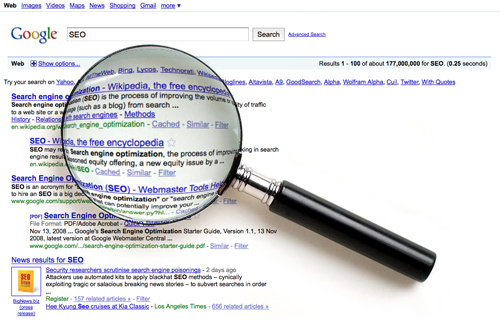
Search Engine Optimization (SEO) is such a talked-about subject, that one would think that it is very well understood. There are many methods that people claim to know about getting your site to the top of search engines. Unfortunately, there is only one (legitimate) way to do it. The others are all schemes and inaccuracies that can potentially cost you your place in Google‘s ranking system.

First Myth: Keywords and Meta Tags.

“Meta Tags, placed in the header of your site’s HTML, are meant to help web crawlers find, index, and rank your page’s worth amongst the competition.”

This may have been true some time back, however Google does not even read meta tags for indexing purposes. Money invested in little phrases that attempt to raise your site on Google’s ranking system will not result in any change.

Second Myth: Flash Sites can’t be indexed.

“Flash sites can’t have their text read by the web crawlers, and therefor can’t be indexed or go higher in Google’s ranking system.”

This is no longer true, and even if it were, it could be circumvented easily. The newest version of flash allows its compiled files to be indexed. If you have a website using an older version of flash however, you can place the text in a hidden div for webcrawlers to read. Some people believe this to be “Black-Hat” SEO, or frowned upon in order to boost one’s rank. This is only the case if your text is blatantly different from the content in your flash file. If they correspond, this is a perfectly acceptable means of making your site more accessible to webcrawlers and indexing.

Third Myth: Linking to sites.

“Linking to other sites will boost my site’s ranking
”

Linking to reputable sites may sound like a good idea, however it will not help you achieve a higher page ranking. Rather, it is important to get other sites to link to you.

Well, what does work?

Google has created a very effective system that is difficult to beat. The more sites that link to your content, the higher your rank will be. It’s almost like multilevel marketing. A site with 10 links to it is worth more linking to you than a site that has no links to it at all. Basically, Google’s philosophy is: If you have content that is good or worth reading, others will link to it.” This makes it hard to artificially boost your rank.

Many people promise to be able to boost your rank by paying sites to link to you, etc. This, however, is frowned upon by Google. Any site caught selling it’s reputation by linking to your site for money will lose points in Google’s ranking system, which will then affect your site as well. Additionally, creating fake websites to point to your site in order to boost it’s rank may work temporarily, but when you get caught Google will either ignore these false links, or will penalize your site’s ranking.

The bottom line:

Lets not kid ourselves… Google is king of the internet when it comes to searching. That is why it’s important to be aware of, and follow their rules. In order to make your website succeed, it is important to invest time and money into developing good content that is worth reading, sharing, and linking to rather than throwing money at companies that promise more sales by magically getting your site to the top of the list.

The iPad

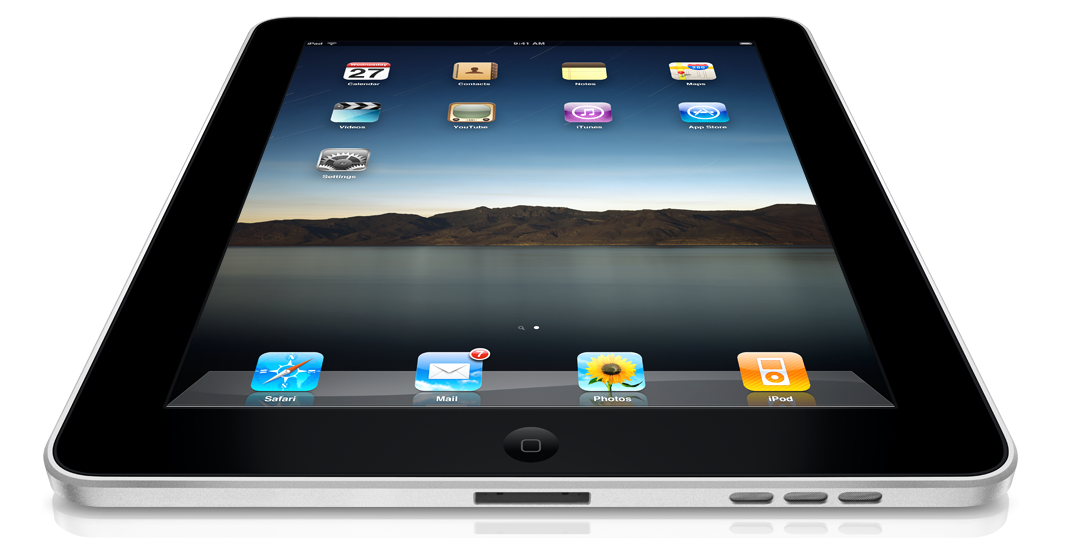
I believe that the iPad is a misunderstood device. Those who love it love it, and aren’t necessarily sure why. Those who hate it hate it because it’s not what they want. This polarization is due, I believe, to the misunderstanding of what the iPad is, and what it is meant to accomplish.

When I first heard of the iPad, I was “underwhelmed.” I was disappointed that Apple would make a tablet device that did so little in terms of computing. I wanted a full Mac OS that would run all my programs like Illustrator and Photoshop. I wanted to use it as a way to draw with a pen like a Wacom Tablet. That, however, is not what the iPad is meant to do.

One of Apple’s strengths as a company is finding a product that is in the market, but not well defined or established, creating a product that is better to fill the needs, and releasing it with Apple’s expert showmanship. The iPod was by no means the first MP3 player, but Apple has successfully swept in and taken the entire MP3 player market. Even Zunes are referred to as iPod devices and not MP3 players! I believe that the iPad is Apple’s answer to the “netbook.” It is no secret that Steve hates netbooks. They have small screens, small keyboards, and limited capabilities. Yes, it runs a “full” operating system, but trying to do Photoshop on a 7 inch screen sounds like no fun at all. The iPad makes consuming information (which is what netbooks are mostly used for) such as reading, browsing, and watching a complete delight. The iPad is large enough to not feel cramped, and the onscreen keyboard can disappear, which means more space for the media you are viewing.

This is why consumers like the iPad. I think it’s a very nifty product, and fills a gap that netbooks just couldn’t. I however never felt the need for a small device to consume information on. I think my iPhone is fine for that, and anything more is what my MacBook is for. That’s not to say I would not own an iPad, but rather I would not go out of my way to own an iPad.

It’s the perfect device for consumers of information and media. Not the device for creative professionals. It fills a need in our market, and with Apple’s ability to dominate the market, we will finally see the death of netbooks.

I for one am waiting for a MacBook Touch…

© 2007-2015 Michael Caldwell